The registers that quietly hold a family's story.
On the banks of the Ganga at Haridwar, certain priestly families have kept handwritten records of pilgrim families for generations. They are called bahis, and they read like the long ledger of a country.
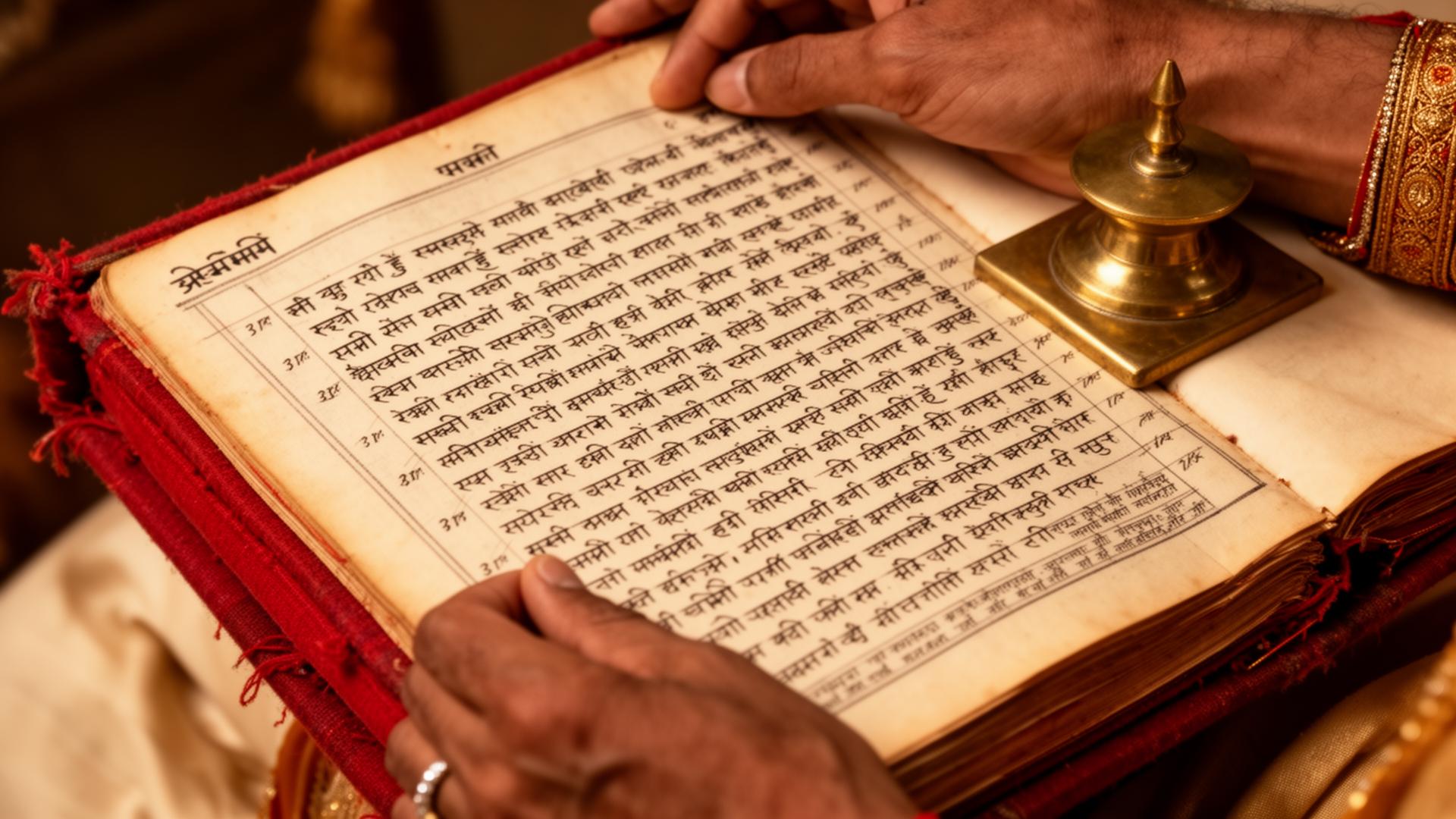
Each register is the property of a particular panda family — hereditary priests whose own families have served specific regions, communities and lineages for centuries. When a family travelled to Haridwar, the head of the household would, traditionally, sign or dictate an entry in the appropriate register: who was present, where the family came from, the names of forebears, and any notable family events to that point.
Read together, these entries form an extraordinary, decentralised archive of the Indian family — far older than any modern civil record. Many of the registers in current use trace continuous entries back several generations, and earlier registers in the same families' custody sometimes reach much further still.
What is usually recorded
Entries vary by region and by panda family, but typically include the names and relationships of family members present, the ancestral village, the gotra, and the date of visit in the traditional calendar. Some registers also note professions, marriages, deaths and the names of those who could not travel.
Why this work matters now
For many families — particularly those whose more recent generations have lived outside India — these registers are now one of the few sources that can reliably reach back beyond living memory. They are also fragile. Our work is in part research and in part preservation: bringing these entries into a permanent digital form, alongside the family they belong to.